
IJCS
Associate Editor
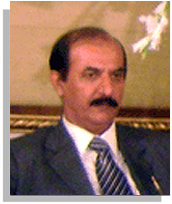 Fateh Muhammad Burfat earned his B.A (Hons) , (Sociology, 1981) , M.A (Sociology, 1982) and Ph.D (Sociology 1998) degrees at University of Karachi. He has specialized in Sociology, Social Anthropology and Criminology. He is working as Full Professor, Department of Sociology, University of Karachi, from January,2001, and is Director Student’s Guidance Counseling, Placement & Overseas Examinations Bureau, University of Karachi. He is currently teaching Sociology of Economic Development, Sociology of Education and Violence, Terrorism and It’s Control. He has published numerous research articles on Juvenile Delinquency, Drug Abuse, Street Children, Poverty, Social Change, Gender, Violence and Terrorism in International and National Research Journals.
His one book contribution was published in the book “Delinquency and Juvenile Justice Systems in the Non-Western World” edited by well-known Criminologist Paul C.Friday and published by Criminal Justice Press, Monsey, New York, USA. He successfully supervised 20 Ph.D Thesis and 08 M.Phil/M.S Thesis. Currently, he is the president of Pakistan Sociological Association and Vice-President of South Asian Sociological Society. He is a member of the Population Association of Pakistan, the International Union of Social Scientists for Population, the American Sociological Association and the American Society of Criminology. He is also a member of An Advisory Committee on Curriculum and Textbooks Reform, and member Panel for Scrutiny of Feasibility Reports for Institutions/Universities ,Govt.of Sindh , Education& Literacy Department.
Currently, he is the Principal Investigator in the project “Third Party Validation of Need-Based Scholarship” for Higher Education Commission/World Bank from August 2013. He was the Project Director (Sindh Chapter) on a UNESCO’s project “Globalization and the International Drug Problem in Central Asia and Pakistan” MOST. He was the Principal Investigator on the projects of “Social Audit of Local Governance and Delivery of Public Services” UNDP, Pakistan (Sindh Chapter) in 2010 and 2012.
He was the core member of an International team on “Cultural Strategies For Drug Abuse Intervention Programs in Asian Settings” from 1992 to 2001, sponsored by the Commission of European Communities. Dr.Burfat has organized several International and National Conferences, Seminars and Workshops on different Sociological and Criminological Issues of Pakistan. Also participated in International workshops/seminar and conferences.
Acknowledgement | International Journal of Criminology and Sociology
Lifescience Global would like to appreciate and thank all the reviewers and authors for their rigorous and conscientious efforts for the International Journal of Criminology & Sociology. Below is the list of people who contributed towards the success of the journal during 2014.
|
Lifescience Global would like to appreciate and thank all the reviewers and authors for their rigorous and conscientious efforts for the nternational Journal of Criminology & Sociology. Below is the list of people who contributed towards the success of the journal during 2014.
|
International Journal of Criminology and Sociology | Volume 4
|
|
Intersections of Culture, Migration and Intimate Partner Violence as Told by Migrant Youth - Pages 208-219 Major Selection among Saudi Male University Students: a Multinomial Logit Model - Pages 200-207 Morality, Rationality and Academic Dishonesty: A Partial Test of Situational Action Theory - Pages 192-199 The Effect of Marijuana Legalization on Anticipated Use: A Test of Deterrence Theory - Pages 181-191 Can a Racist Society Produce and Sustain Just and Healthy Interracial Relationships? A Few South African Case Studies - Pages 166-180 A Three-dimensional Perspective on Wrongful Convictions in Israel: Organizational-Forensic, Psychosocial and Practical - Pages 154-165 Emerging Cultural Conflicts in Italy: A Challenge for Criminal Law - Pages 141-153 Attention Deficit Hyperactivity Disorder - A Pre Audit Study of the Pattern of Drug Treatment in a Specialist Community Child and Adolescent Mental Health Service in the UK - Pages 136-140 Abuses and Distortions in Emotional Processes as Risk Factors for Parricide - Pages 128-135 Effects of Moral Self, Self Esteem and Parental Bonding on Delinquency among Young People in Hong Kong - Pages 119-127 The Intricacies Involved in the Analysis and Interpretation of Hammer Transfer Stain/s in a Crime Scene - Pages 107-118 The Standard of Proof for Redressing Wrongful Convictions - A Comparative Study with Case Analyses - Pages 94-106 Bayesian Analysis of the Sudanese Immigrant Youth Crime Rates and the “Likelihood” of Committing Violent Offence than an Australian-Born - Pages 82-93 Homeless Perpetrators and Victims of Crimes: Preliminary Findings of a Research in the Region of Puglia (Italy) - Pages 64-81 Consequences of Drug Abuse among Female and Male Population of Karachi: A Statistical Surveyed Approach - Pages 59-63 Family Structures in Pennsylvania and its Effect on Delinquent Acts: A Data Analysis - Pages 52-58 Denial of Child Maltreatment Histories among Male Adolescent Offenders - Pages 47-51 Are They Guilty Because of Their Gender? - Pages 36-46 The Social Roots of Contemporary Prejudice - Pages 28-35 A Multidisciplinary Attempt at Understanding the Violence in Mexico - Pages 16-27 A Multilevel Analysis of Registered Sex Offender Violation Status: The Role of Neighborhood Disadvantage and Social Services - Pages 1-15 Disclaimer Statement |

Abstract : 12-Step Programs to Reduce Illicit Drug Use
|
|
Abstract: Many treatments are not rigorously evaluated as to their effectiveness, and it is uncertain which types of interventions are more effective than others in reducing illicit drug use. The aim of this paper is to provide a systematic mapping of the research literature of the effectiveness of 12-step programs in reducing illicit drug use. A systematic literature search was conducted based on 17 international and Nordic bibliographic databases. A total of 15,993 references were screened, and eleven unique studies were finally included in this mapping. The included studies demonstrated conflicting results regarding the effectiveness of the 12-step treatment and TSF in reducing individuals’ drug use. Two studies reported a positive effect of the TSF treatment compared to the comparison conditions in reducing drug use. Six studies reported no differences between the 12-step program and the comparison condition, and the remaining three studies reported a greater effect of the comparison condition. However, the included studies demonstrate that, in general, 12-step programs and the comparison conditions have some positive effects in reducing drug use and supporting abstinence among the participants. Keywords: 12-step, TSF, illicit drugs, mapping, literature review.Download Full Article |