

JRUPS
Song-Jeng Huang - Deputy Editor
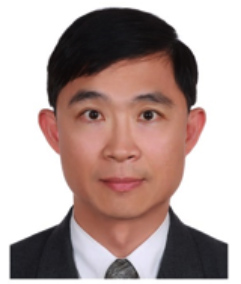
Biography
SCOPUS: (https://www.scopus.com/authid/detail.uri?authorId=55522746200)
ORCID iD: (https://orcid.org/0000-0002-6582-0339)
Song-Jeng Huang, he received the Ph.D. in Dynamics and Strength of Machine, Instrument and Apparatus at MATI-Russian State University of Technology in 2000, and is currently a professor in the Department of Mechanical Engineering, National Taiwan University of Science and Technology, Taipei Taiwan, ROC. His research focuses on Synthesis of Inorganic Nanotubes, Magnesium Hydrides Hydrogen Storage Materials, Metal Matrix Composite Materials, Bulk Nanomaterials made by Severe Plastic Deformation, and Bio-Medical Engineering (Microbial Fuel Cell System and Bio-Chip for Blood Coagulation Tester).
Dr. Huang worked as Visiting Professor (6/2006-5/2007) at School of Aeronautics and Astronautics, Purdue University, USA; Visiting Scientist (9/2013-7/2014) at School of Chemistry, Weizmann Institute of Science, Israel; Director of Science and Technology Division (10/2018-09/2022) of Ministry of Science and Technology (Taiwan) at Representative Office in Moscow for the Taipei-Moscow Economic and Cultural Coordination Commission.
Dr. Huang has published 117 Journal papers. In recent 5 years (2018-2022), he obtained 8 project grants from NSC and other organizations, and fruitfully published 57 journal papers and 27 conference papers. His google scholar h-index is 22 (19 since 2018) and i10-index is 44 (35 since 2018). Three of his invented technologies have been transferred to 3 private Taiwanese companies.
He has excellent cooperation with industries to implement his academic research results. Besides, Dr. Huang has received 12 patents of metal-matrix composites and bio-chip detector. He has executed 4 bi-lateral international projects, including 3 Taiwan-Russia grants and 1 Taiwan-Slovak grant.
He is a co-founder (since 11/2014) of Winnoz Inc. (www.winnoz.com), which is a global network of specialists to provide winning innovations in biosensing technologies to the healthcare industry and the biomedical industry.
Abstract : Application of Disordered Organic Semiconductor Theory to Low Temperature Curing of Epoxy Resins
|
|
Abstract: The steep autocatalytic feature in a highly accurate DSC study of the heat rate from curing an epoxy resin with piperidine at 27.5 Deg C could not be explained using chemical kinetic power laws usually applied to curing epoxy resin products at higher temperatures. The theory of disordered conjugated organic semiconductors developed in the last decade has been applied to the observed heat rate data. Four heat rate sources have been identified to completely account for the experimental data. Two of the four sources generating 80% of the heat are consistent with mobility change of ion pairs indicating that the low temperature cure follows an organic semiconductor mechanism. It was shown that autocatalysis did not begin until about one fiftieth of the epoxy rings were opened (ignition). After ignition the heat rates of two propagation mechanisms grow exponentially. One charge transport mechanism generates a small heat rate but grows immediately after ignition due to an increase in ion pairs by the dopant (piperidine). The second mechanism appears later but becomes dominant, peaking at 50% completion, where the heat rate is about 50 times higher than the start of the first mechanism. The rate increase is attributed to localized energy sites that lower the LUMO level closer to the HOMO level of the monomer increasing the mobility (heat rate). Keywords: Epoxy resins, kinetics (polym), calorimetry, diffusion, organic semiconductors.Download Full Article |

Ahmed Fatimi - Profile
Acknowledgement | Journal of Research Updates in Polymer Science
Lifescience Global would like to appreciate and thank all the reviewers and authors for their rigorous and conscientious efforts for the Journal of Research Updates in Polymer Science. Below is the list of people who contributed towards the success of the journal during 2015.
|
Lifescience Global would like to appreciate and thank all the reviewers and authors for their rigorous and conscientious efforts for the Journal of Research Updates in Polymer Science. Below is the list of people who contributed towards the success of the journal during 2014.
|